
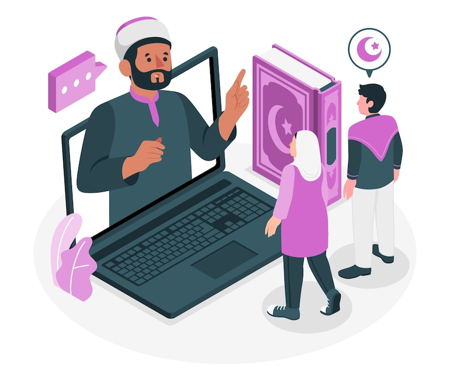
Speaking Arabic can lead to unique cultural encounters, profound conversations, and a better knowledge of your spirituality. Over 400 million people speak Arabic, making it one of the most spoken languages in the world. Arabic has gorgeous writing, unusual sounds, and interesting syntax. It’s a great language to learn, whether you’re going to the Middle East or just want to learn something new. Begin with simple phrases like greetings and everyday phrases. Listen to people who speak Arabic, use language applications, and watch Arabic music or entertainment. If you practice every day, your vocabulary and confidence in speaking will grow with time.
The Meaning and Beauty of Islamic Prayer Words
If you wish to connect spiritually with the teachings of Islam, you need to know what the islamic prayer words mean. People regularly say these lines in their everyday prayers, and they have deep implications of peace, thankfulness, and giving in to God. Muslims say things like “SubhanAllah” (Glory be to God), “Alhamdulillah” (Praise be to God), and “Allahu Akbar” (God is the Greatest) over and over again. Learning these words will not only help you understand the most important ideas in Islam, but it will also help you learn some basic Arabic words. With practice, even people who don’t speak English as a first language can readily add these words to their daily vocabulary.
Learn how Islamic words can help you in your everyday life.
Using Islamic phrases in regular speech will help you spiritually and help you learn more about Islamic culture. Phrases like “Insha’Allah” (God willing), “Mashallah” (What God has willed), and “Astaghfirullah” (I request forgiveness from God) show both faith and good manners. These phrases mean more than simply words; they show humility, thankfulness, and being aware. Many students say that saying Islamic phrases over and over again helps them learn the language and gives them quiet time to think. As you learn more Islamic words, you’ll start to use them naturally in your speech and actions.
Learn Arabic by listening and saying it over and over.
If you want to get better at Arabic, pay attention to listening and repeating. Listening to Quran recitations, seeing Arabic-language films, or using educational apps can all help you a lot with your pronunciation and understanding. Don’t be frightened to make mistakes; just repeat easy conversations and learn how to say hello. Hearing Arabic in real life makes it easier to understand sentence structure and terminology. Repetition helps you remember things and get better at hearing the language. You’ll be able to hold simple conversations and read simple Arabic texts with more and more fluency before you know it.
Learn the basics of Arabic grammar to communicate well.
Arabic, like any other language, has a very important grammar. First, learn the rules for gender, verb patterns, and sentence structure. Arabic nouns can be either masculine or feminine, while verbs shift depending on the topic. Learn how to use common grammatical structures and then use them to make your phrases. Don’t rush; take your time and focus on one rule at a time. Writing and speaking together is a good way to help you remember and recognize things. If you have a good grasp of grammar, you’ll be able to communicate clearly and understand more difficult texts as time goes on.
Use Arabic words every day to improve your vocabulary.
One of the best ways to learn how to speak Arabic well is to learn new words every day. Begin with basic words like numbers, colours, days of the week, and family members. For novices, flashcards, language apps, and calendars that show a new word every day are all useful resources. To get more comfortable with these words, try utilizing them in brief sentences or discussions. It gets simpler to talk and understand other people the more words you know. Learning slowly helps you remember things for a long time, which makes growing your vocabulary an enjoyable process.
Conclusion:
Learning Arabic and Islamic words is a wonderful experience that helps you improve spiritually and mentally. Begin with the essentials, add more with time, and use the language every day. The most important thing is to practice regularly and be genuinely interested, no matter why you’re learning. You don’t have to become fluent right away. Just take it one step at a time, enjoy the process, and celebrate your minor wins along the way. To get systematic help and expert resources for learning how to speak Arabic and understand Islamic prayer terms, go to al-dirassa.com/en to start your journey now.